


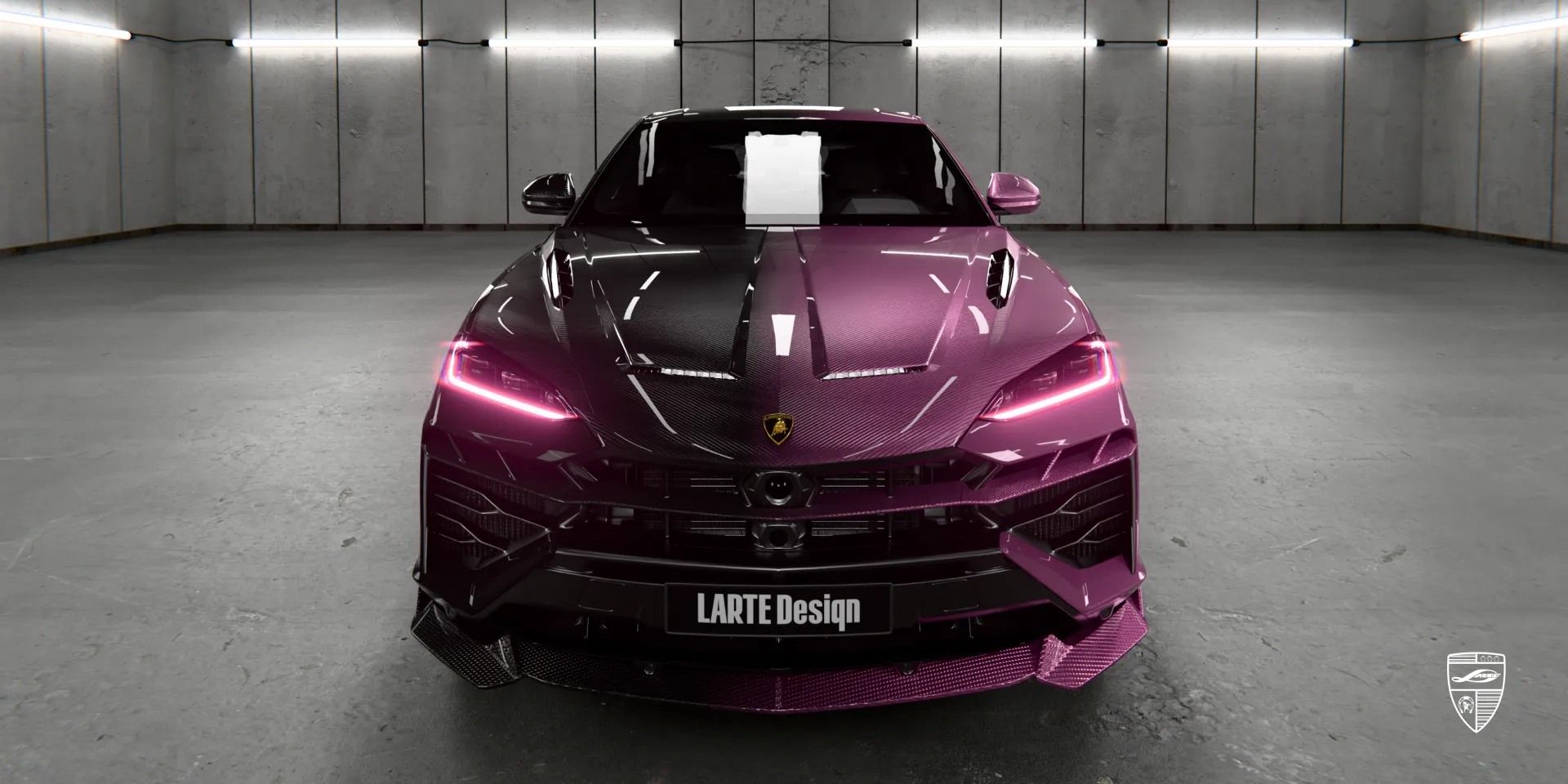
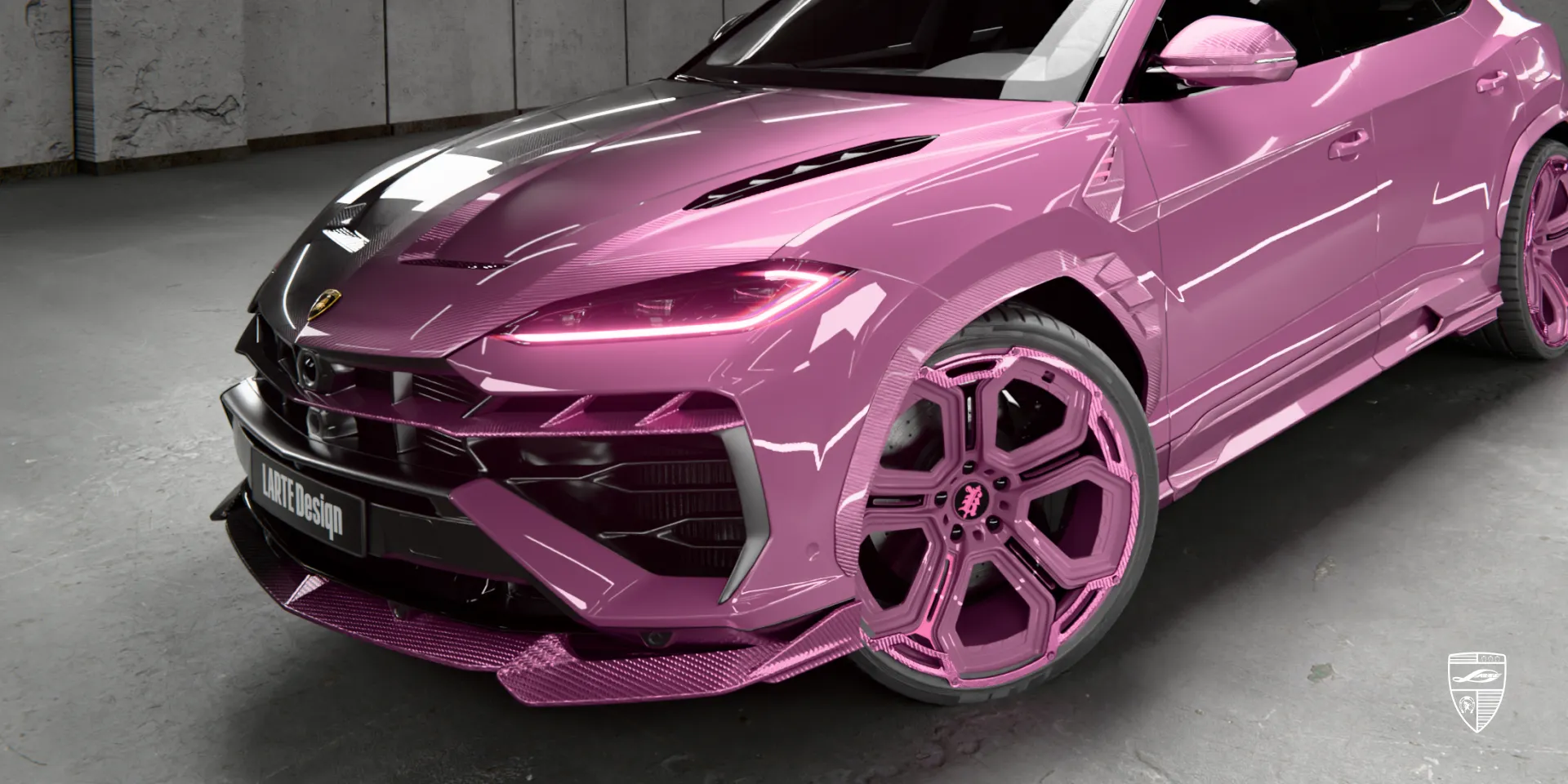
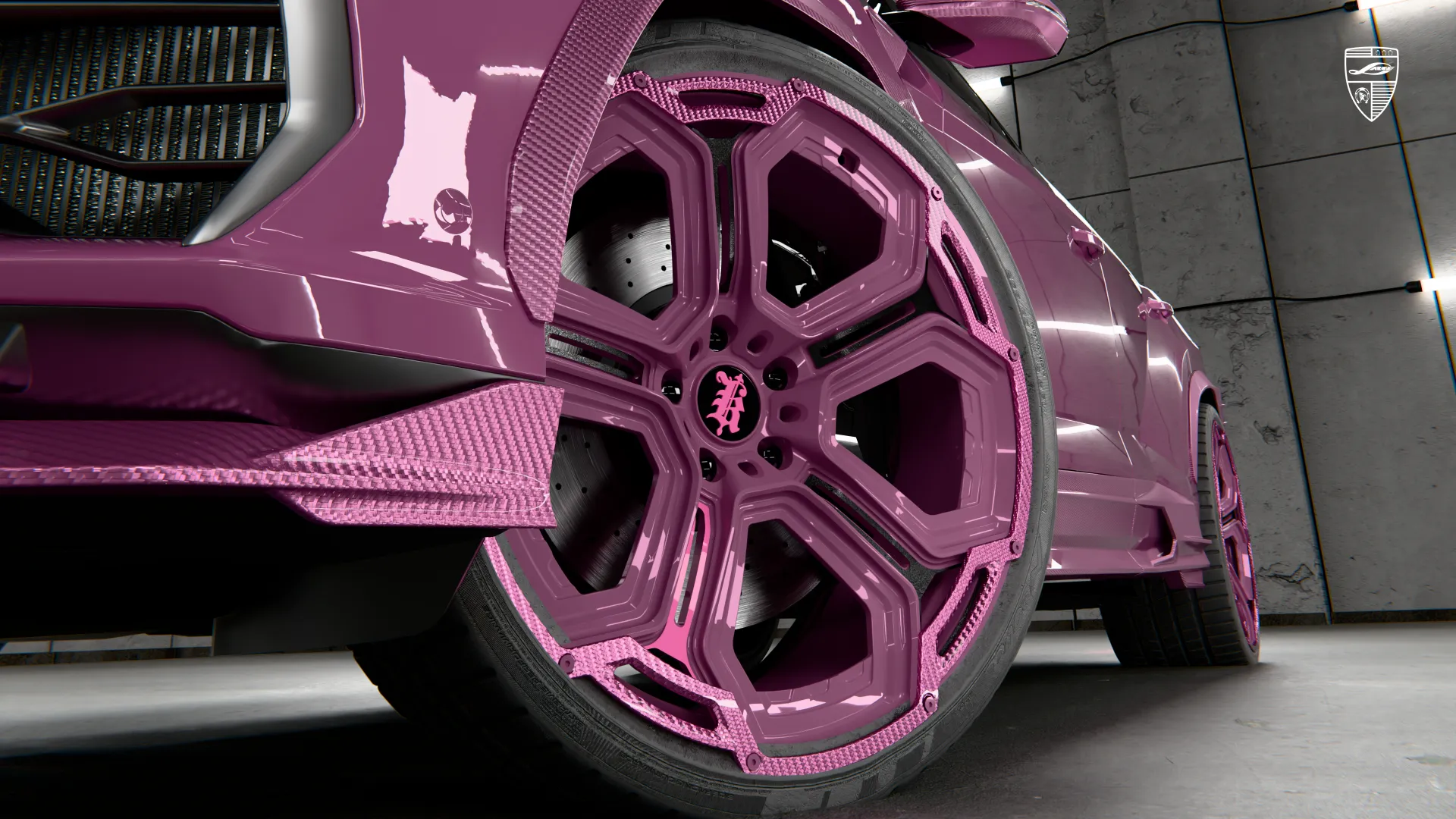
There is a moment in every LARGENDA project when the colour stops being a finish and starts being the material itself. For this Lamborghini Urus SE, that moment came early, and the entire car was built around it.
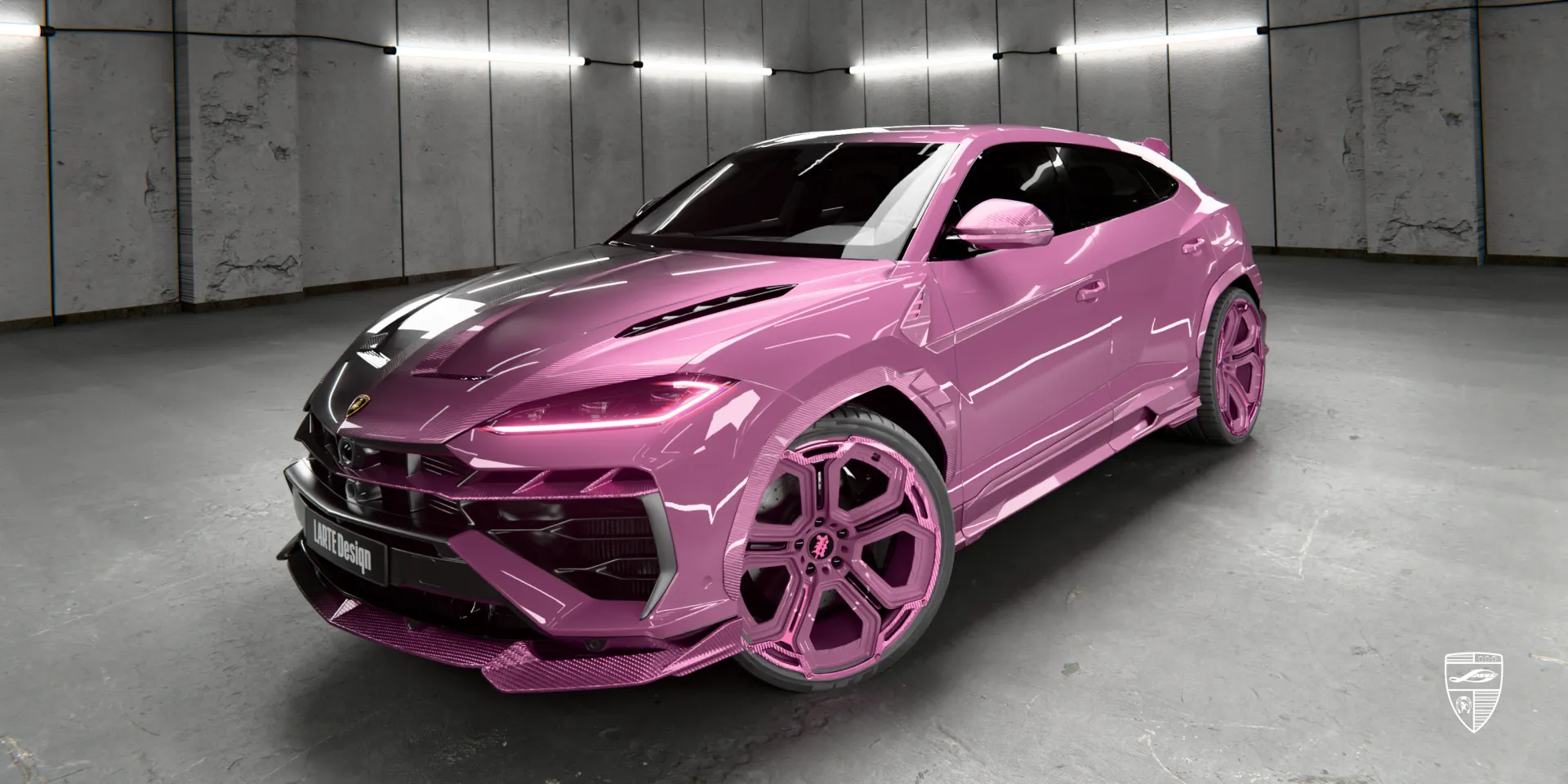
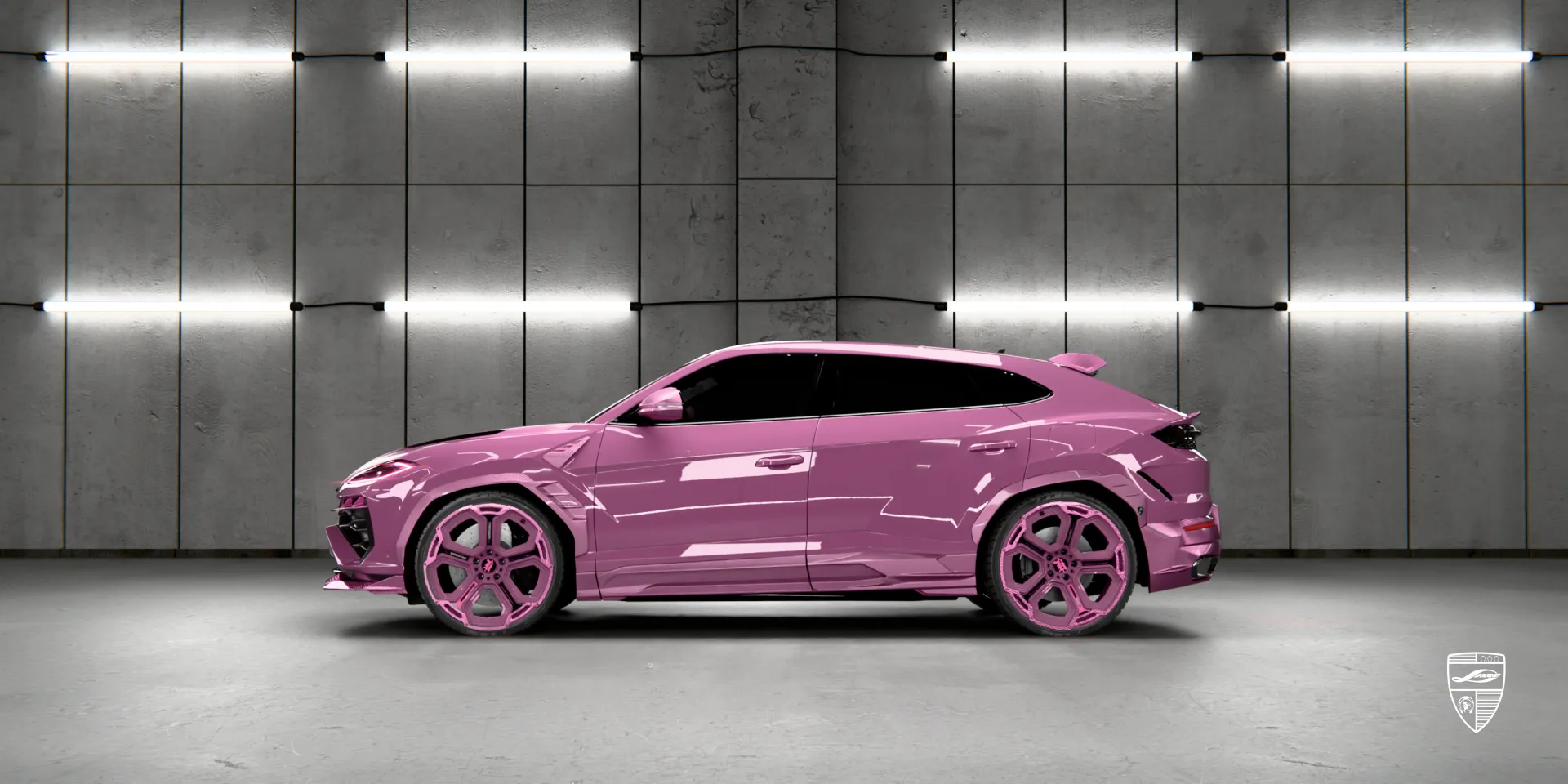
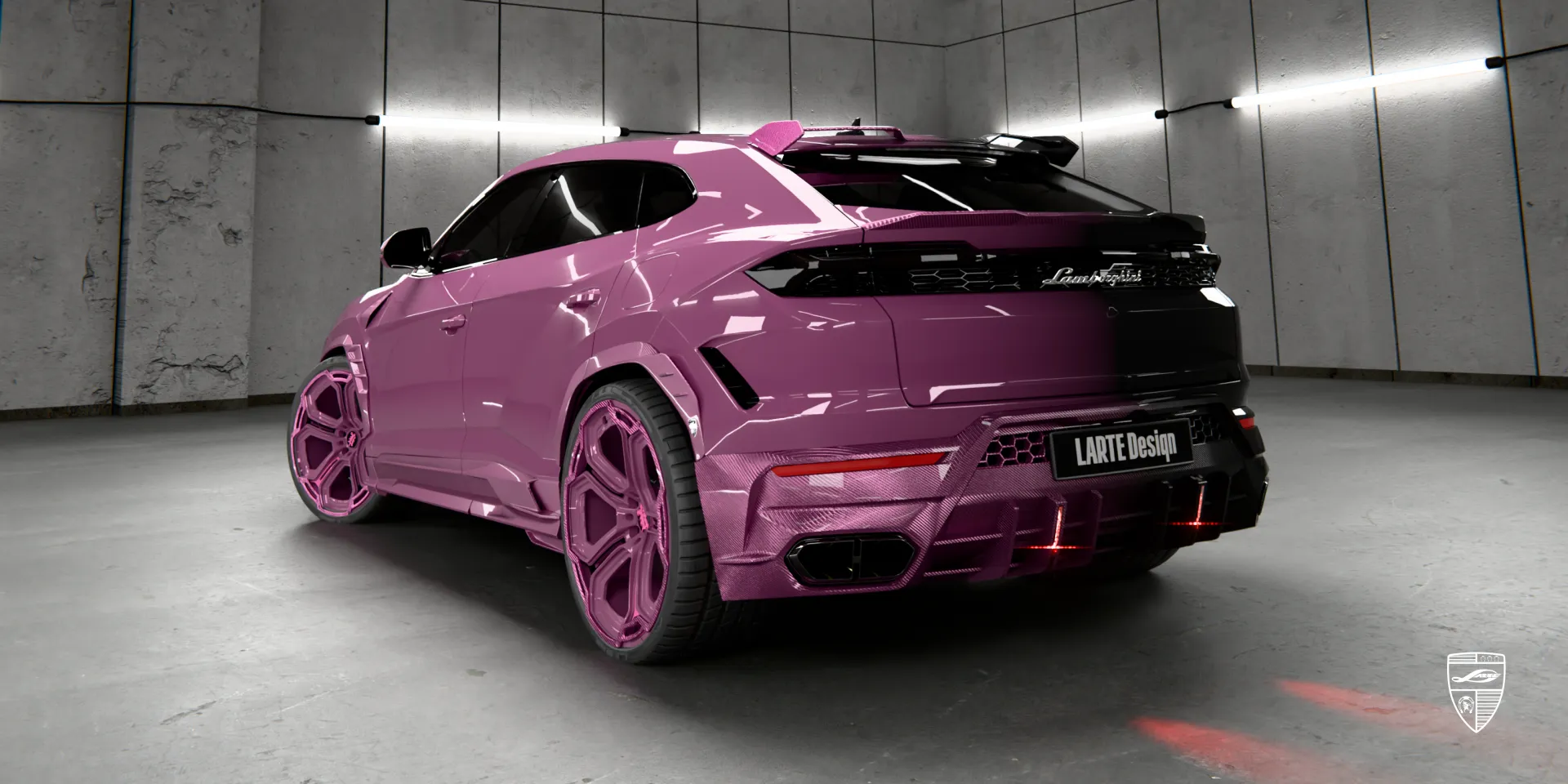
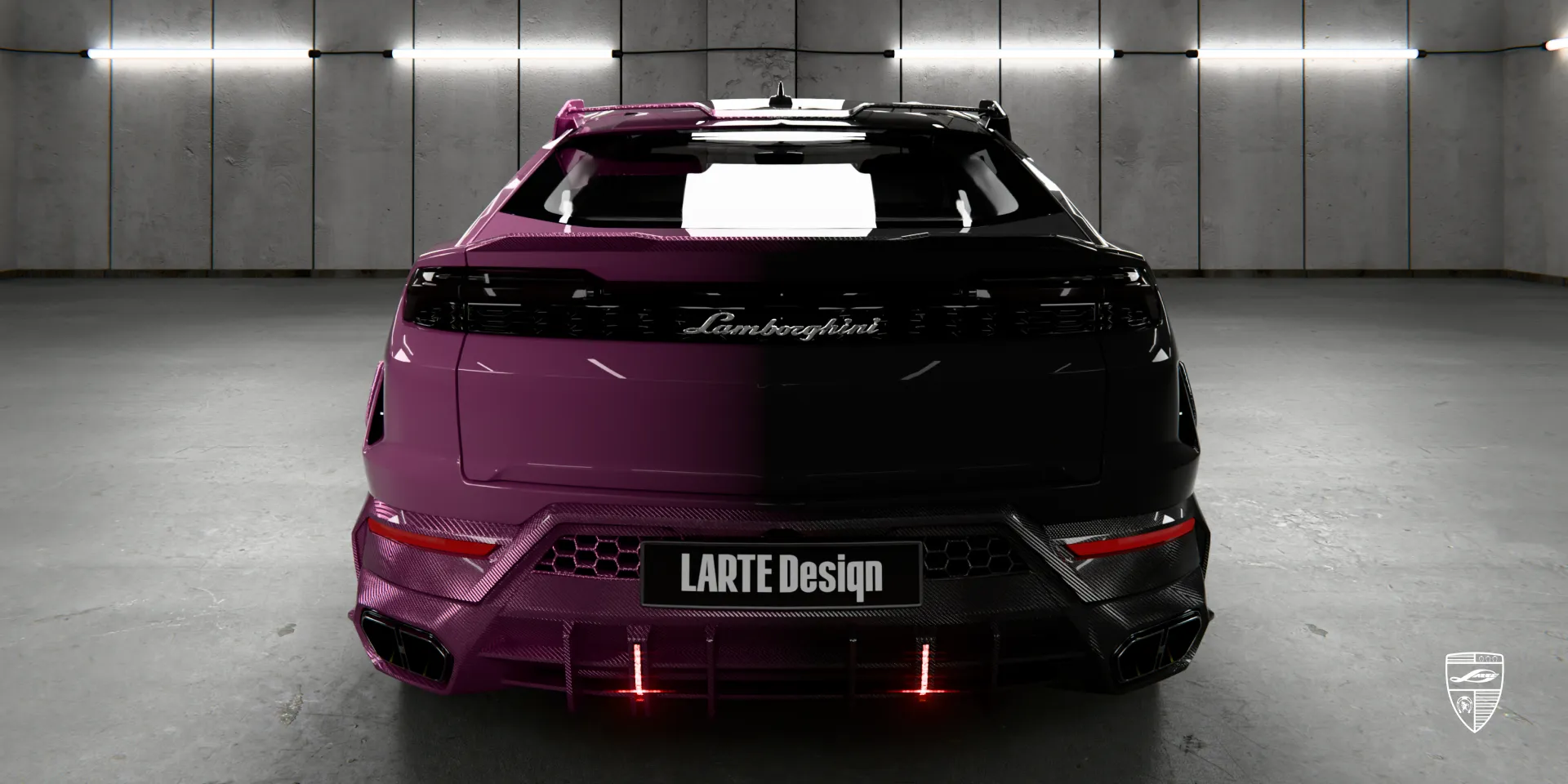
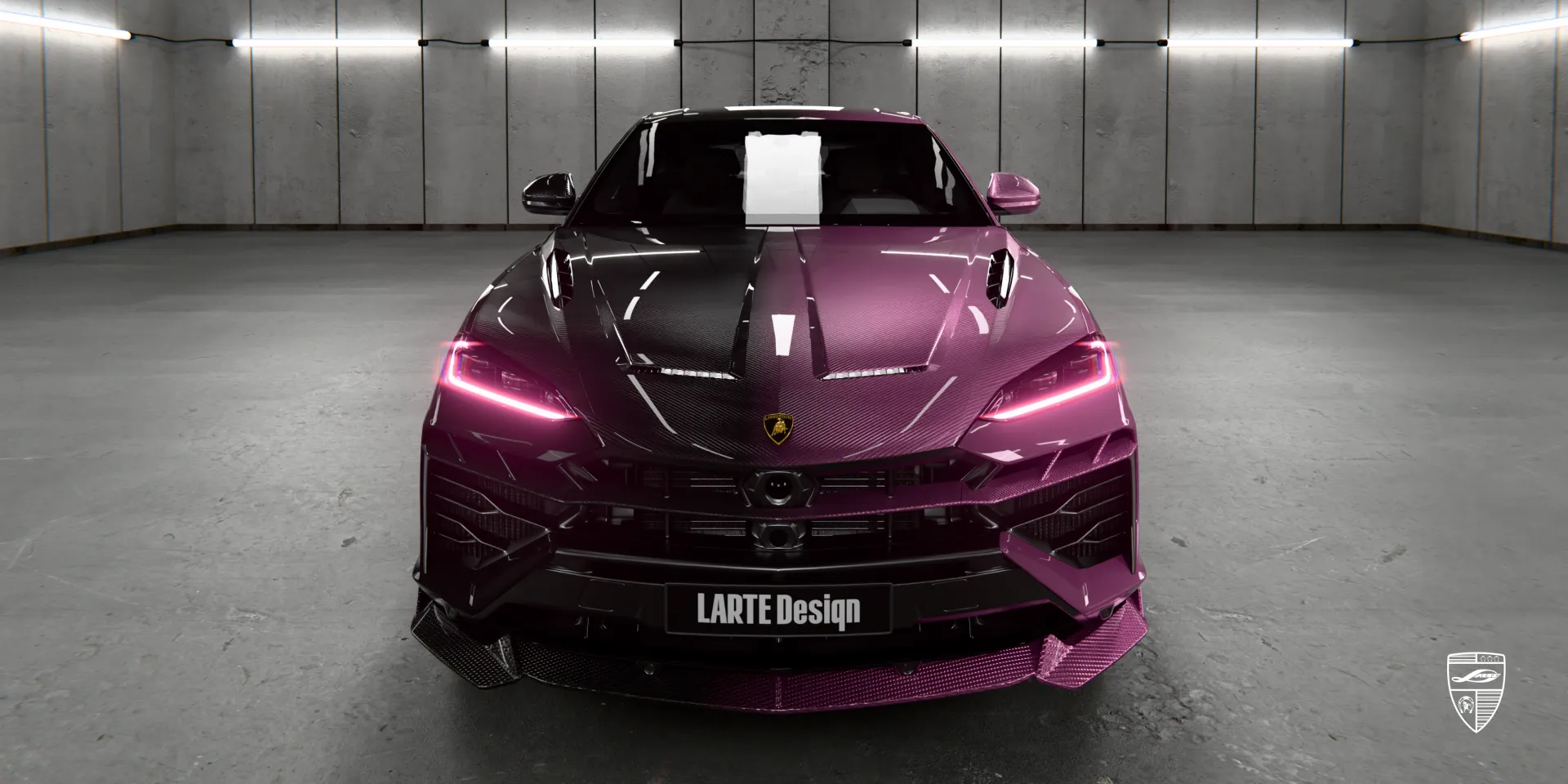
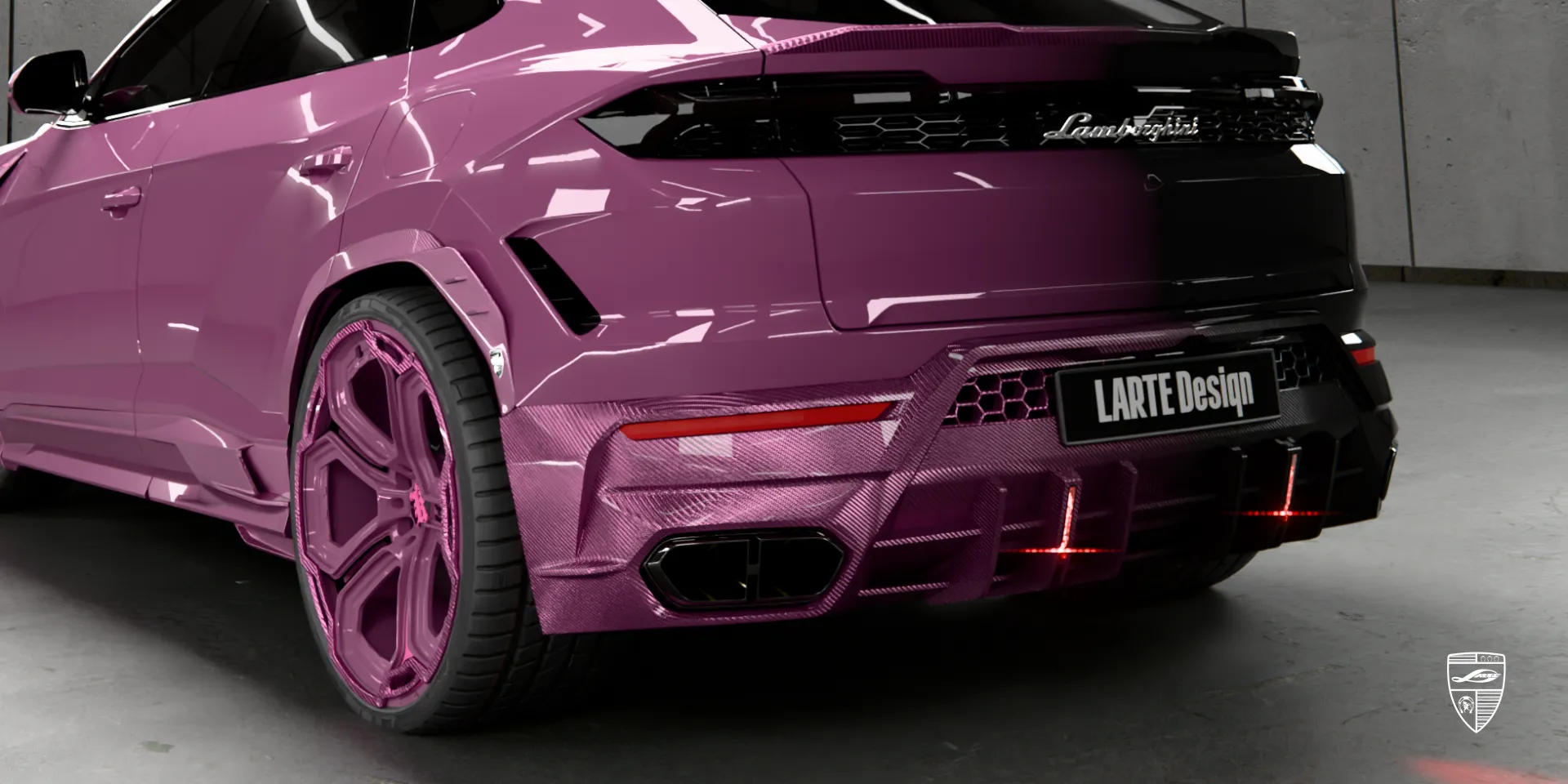
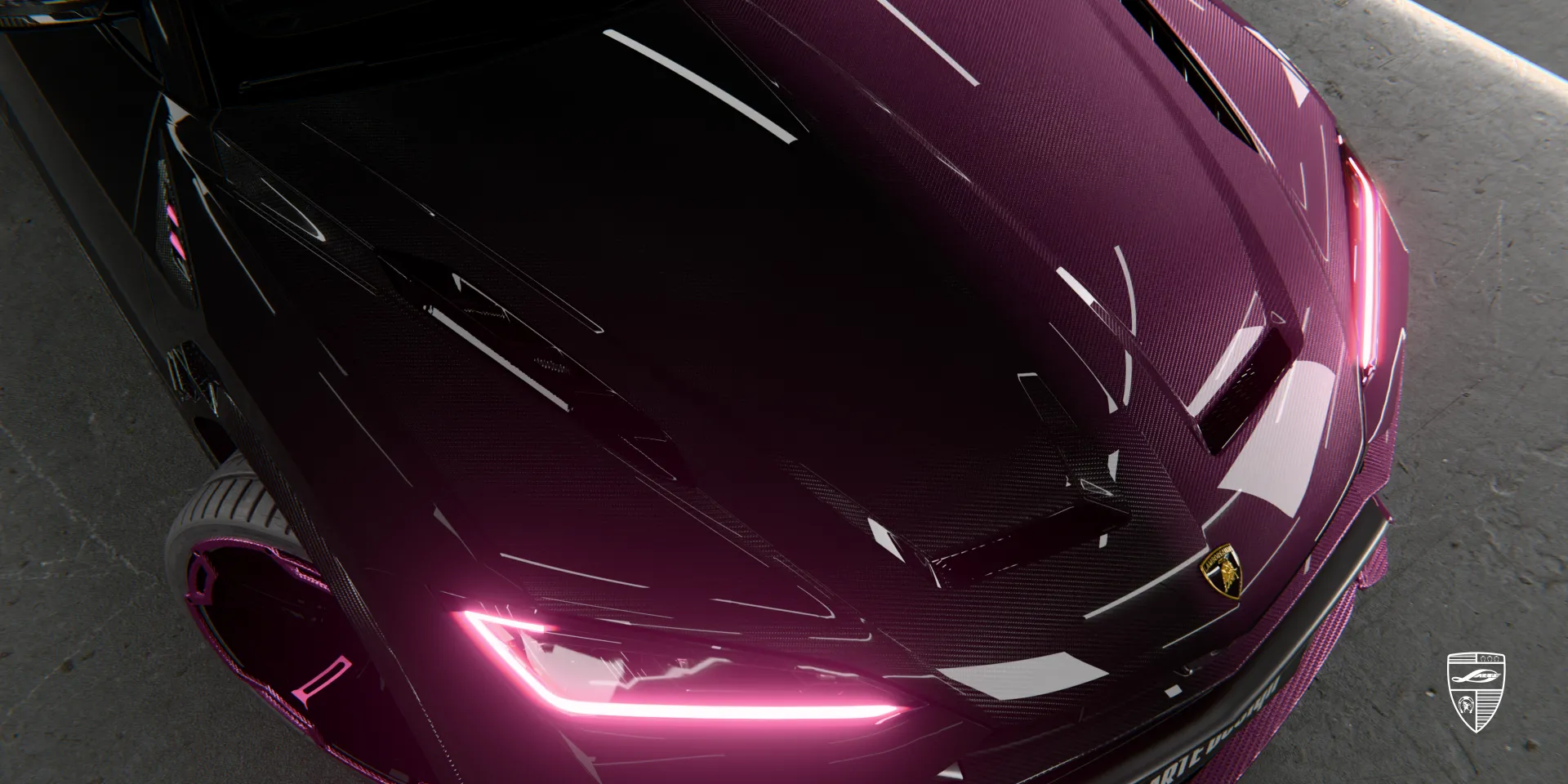
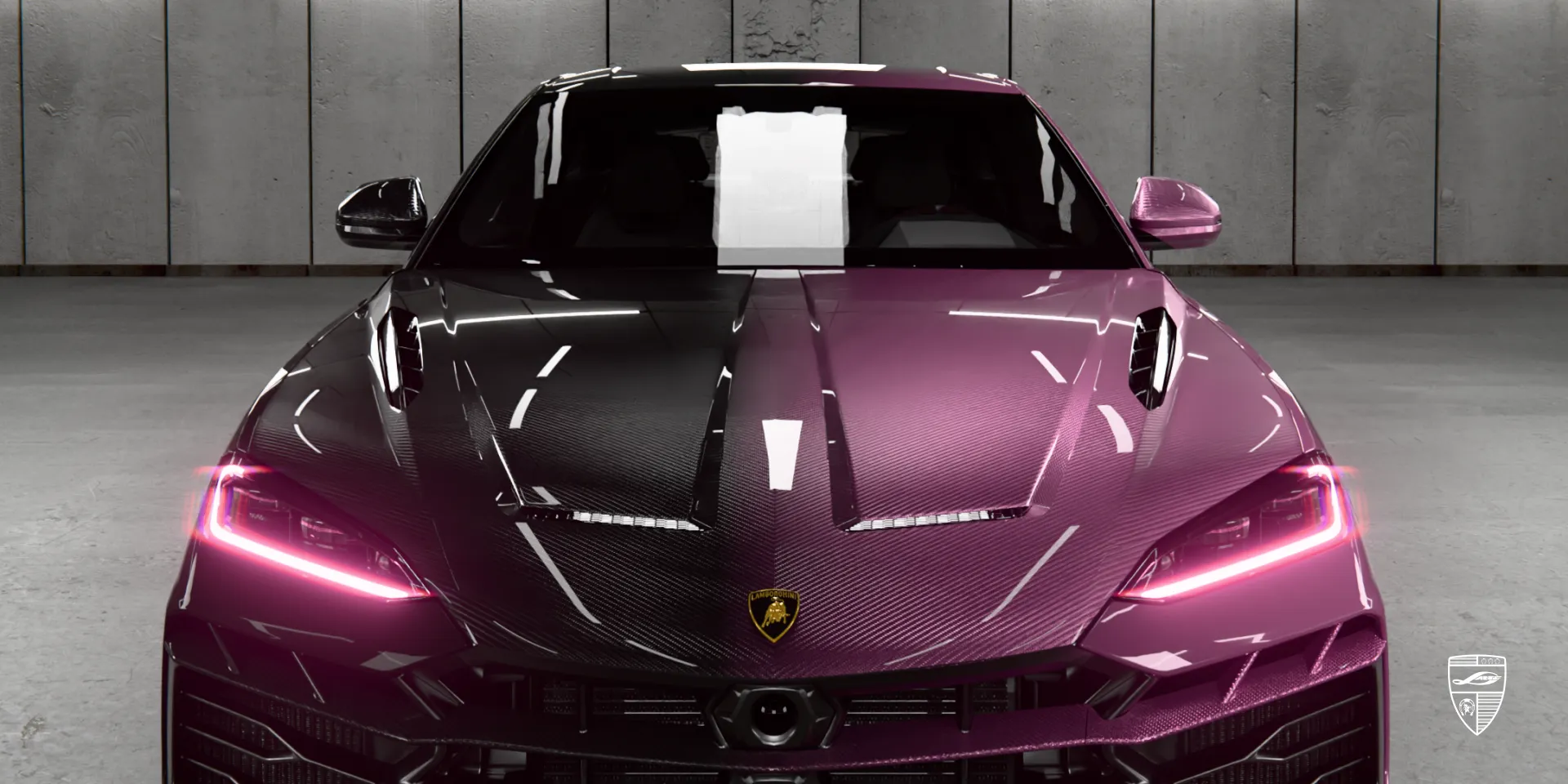
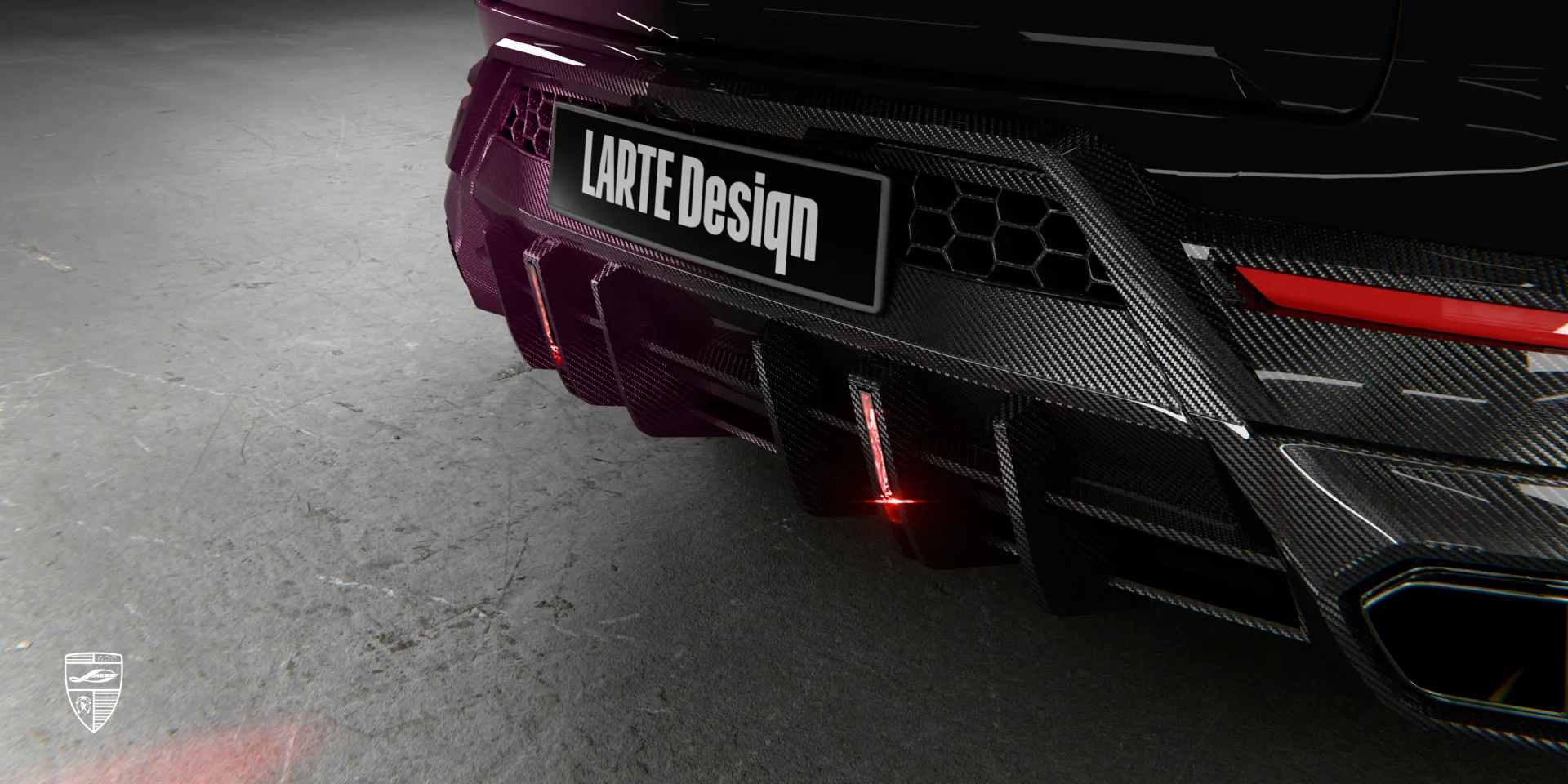
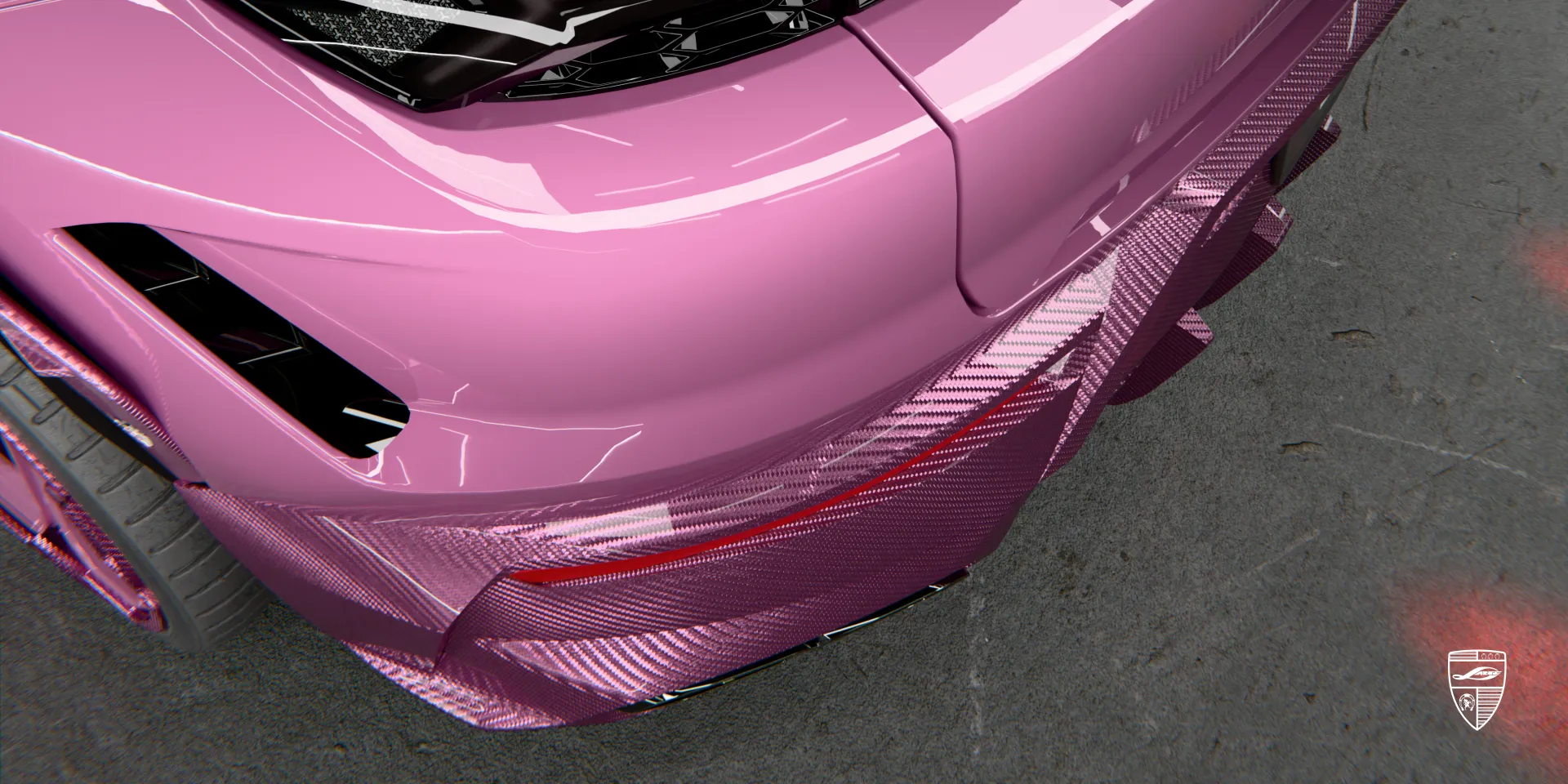
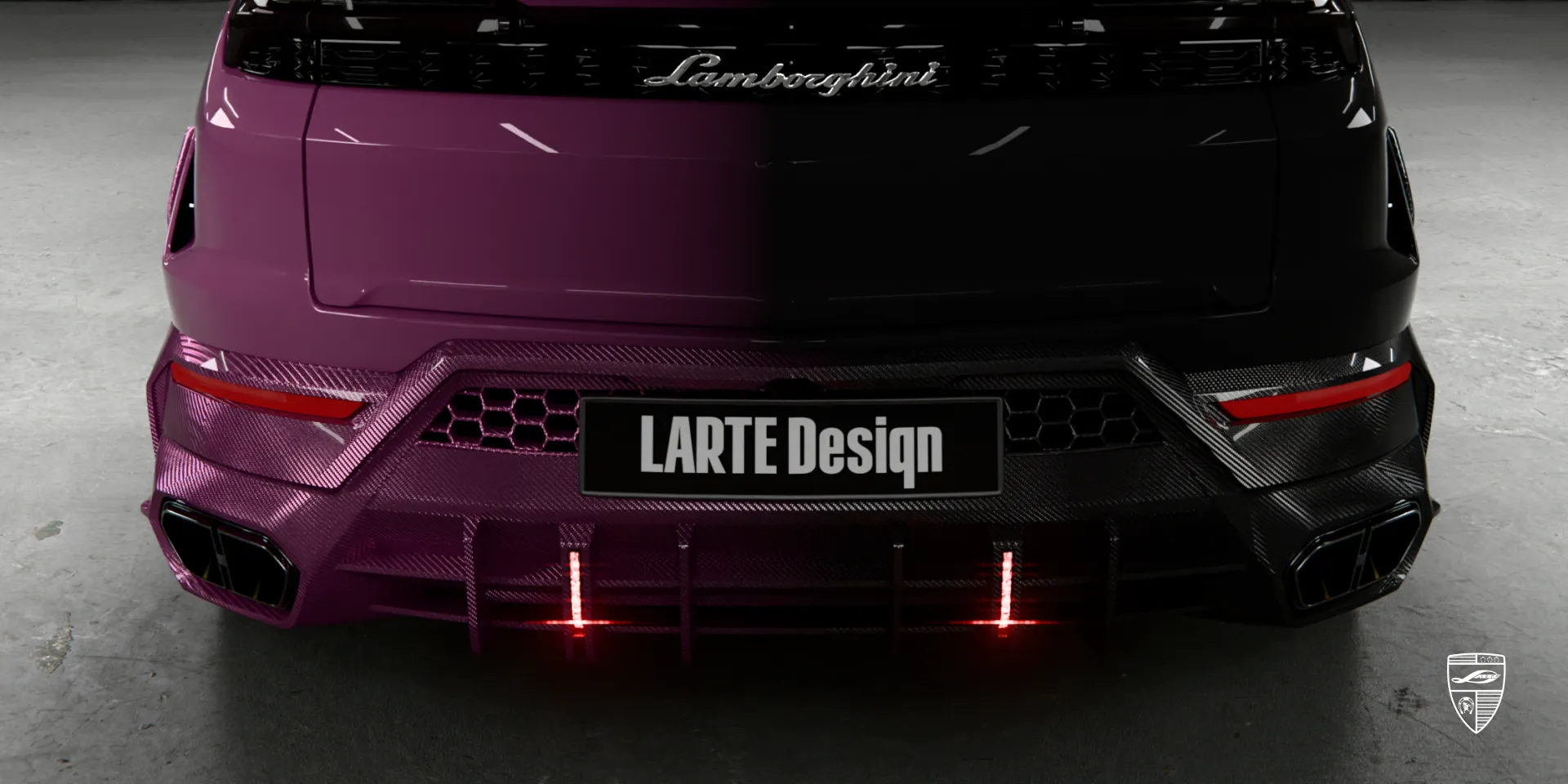
The decision was to put pink and black on the same car without one cancelling the other, and without either of them sitting on top of the surface as paint normally does. The painted body kit for Lamborghini Urus SE would split along the centerline — pink on the left, black on the right, the transition running as a gradient down the middle of the hood, across the roof, and down the centre of the rear deck. The dry carbon exterior would carry the same logic forward, with side components matching their side and symmetrical components taking the gradient inside the weave.
There is a moment in every LARGENDA project when the colour stops being a finish and starts being the material itself. For this Lamborghini Urus SE, that moment came early, and the entire car was built around it.
The decision was to put pink and black on the same car without one cancelling the other, and without either of them sitting on top of the surface as paint normally does. The painted body kit for Lamborghini Urus SE would split along the centerline — pink on the left, black on the right, the transition running as a gradient down the middle of the hood, across the roof, and down the centre of the rear deck. The dry carbon exterior would carry the same logic forward, with side components matching their side and symmetrical components taking the gradient inside the weave.








 facebook
  instagram
  telegram
  youtube
  pinterest